Capturing Cinematic Insights: The Role of Specialty KDP Interior Templates
In the expanding universe of self-publishing, niche-specific tools have emerged as powerful assets for authors and creators. For those whose passion lies in analyzing and documenting the world of film, a specialized interior template is not merely a convenience but a foundational element for crafting a professional product. The concept of a Movie Review KDP Interior transcends simple formatting; it represents a structured environment designed to transform scattered observations into a cohesive, publishable volume.
A Framework for Focused Film Analysis
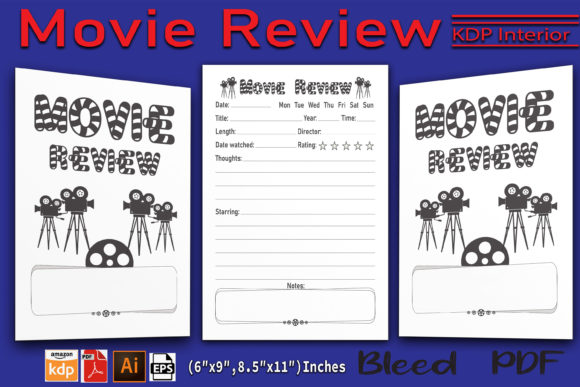
The primary purpose of any dedicated interior template is to provide a pre-established structure. A Movie Review KDP Interior offers a ready-made layout that guides the content creator. Imagine attempting to compile hundreds of film reviews into a single book. Without a consistent format, the result can feel chaotic and amateurish. These templates introduce order through predefined sections for film title, release year, director, key cast, a rating system, and dedicated areas for extended commentary and critical notes. This structure does not stifle creativity but rather channels it, ensuring that each entry maintains a professional uniformity while allowing the reviewer’s unique voice to shine within the designated spaces.
Practical Benefits for Publishers and Film Enthusiasts
Utilizing a specialized interior like the Movie Review KDP Interior Feathers 100 design translates into several tangible advantages. First is the significant reduction in technical overhead. Designing a print-ready layout for a 6" x 9" or 8.5" x 11" book requires precise attention to margins, bleeds, pagination, and typography. A high-quality template resolves these technical challenges, providing fully editable EPS and PDF files that are immediately compatible with Amazon's Kindle Direct Publishing platform. This allows the creator to focus entirely on content—the reviews, critiques, and analyses—rather than struggling with graphic design software and print specifications.
Second, it enhances the perceived value of the final product. A book intended for film students, hobbyists, or even professional critics benefits from a polished interior that reflects the seriousness of its subject matter. Clean, readable pages with intentional design elements, such as distinct areas for plot summary versus personal critique, aid the reader’s navigation. The inclusion of 120 pages of print-ready content offers ample space for a substantial collection of reviews, making the book a comprehensive reference or journal.
Key Characteristics of a Professional KDP Movie Review Interior
When evaluating a template like this, several design and functional characteristics stand out. The mention of "high-resolution" and "bleed" indicates a product crafted for physical print quality, ensuring graphics and borders appear correctly when trimmed. The fully editable EPS file is crucial for customization; a reviewer might wish to add a unique scoring graphic or modify the header style to match their personal brand. Furthermore, the template’s structure often accommodates various types of cinematic analysis. It can be adapted for a logbook of films watched, a critical journal for a film studies course, or a published compilation of a blogger’s reviews.
The dimensions provided, particularly 6" x 9", are a standard and popular trim size for nonfiction books on Amazon, offering a balance between readability and portability. This practicality extends to the user base. While the template is named for movie reviews, its adaptable nature makes it suitable for related projects: a notebook for screenwriting ideas, a tracker for film festival attendance, or a bound collection of cinematography observations. The "100 Ready" notation suggests a substantial number of formatted pages, providing scalability for both small and ambitious projects.
Real-World Applications Beyond the Individual Critic
The utility of such a specialized interior expands beyond the solitary film buff. Educators in cinema studies could employ it to create a custom course journal or assignment logbook for students. Film clubs and discussion groups might collaborate to fill a shared volume with collective reviews. Researchers analyzing trends in genre or director output could use the structured entries to systematically catalog and compare data. For the business owner in the publishing space, offering a series of niche journals—like this movie review interior—can cater to a dedicated community of hobbyists, providing them with the tools to elevate their passion projects into marketable products.
From a workflow perspective, starting with a robust template drastically simplifies the publishing journey. Instead of a linear process of writing, then designing, then correcting print errors, the creator integrates content directly into a proven format. This integration can happen incrementally; one can write reviews over months, populating the editable file as each is completed, leading to a naturally assembled final manuscript. It demystifies the technical hurdles of KDP publishing, making the path from concept to physical book or eBook clearer and more accessible.
Considerations for Selecting and Using a Niche Interior Template
While the advantages are compelling, informed selection is key. A prospective user should verify the template’s compatibility with their own software and skill level. "Fully editable EPS files" implies the need for vector editing software like Adobe Illustrator, though the provided PDF might suffice for those only adding text. The promise of high-quality, print-ready files should be evidenced by clear samples showing proper bleed margins and font clarity.
It’s also wise to consider the template’s flexibility. Does the Movie Review KDP Interior allow for easy addition or removal of pages? Can the rating system be visually altered? The best templates serve as a foundation, not a prison. They enable consistency without sacrificing the creator’s ability to imprint their unique style onto the pages. Furthermore, one must assess the true scope: a 120-page interior is substantial, but will it accommodate the intended number of entries? Planning the approximate number of reviews per page is a practical first step.
Finally, the ethos of such a product aligns with the broader trend of democratized publishing. Tools like these empower individuals to produce professional-grade materials without requiring extensive design budgets or technical expertise. They bridge the gap between passionate expertise—in this case, cinematic knowledge—and professional presentation. By providing a structured, aesthetically pleasing, and technically sound canvas, the Movie Review KDP Interior template allows the content itself, the insightful critique and passionate analysis, to become the undisputed star of the final published work.