The ABC Handwriting Tracing Book: A Complete Guide
In the journey of early childhood education, mastering the alphabet and developing clear handwriting are foundational milestones. For parents, educators, and caregivers looking to support this journey effectively, tools that combine learning with engagement are key. The ABC Handwriting Tracing Book KDP emerges as a thoughtfully designed resource aiming to do just that. This article explores its features, purpose, and the practical value it offers to anyone involved in nurturing a child’s literacy skills.
What is the ABC Handwriting Tracing Book?
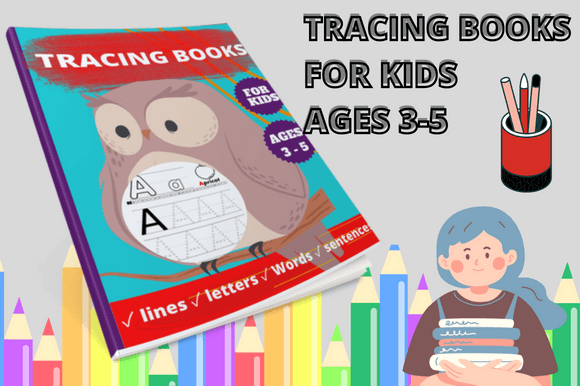
At its core, the ABC Handwriting Tracing Book KDP is a practice workbook dedicated to alphabet learning and handwriting improvement. Unlike generic tracing sheets, this book is structured as a complete, 100-page activity guide. It is crafted with the understanding that learning should be a holistic experience, stimulating not just logical skills but also creative thinking. The book’s primary goal is to provide a clear, step-by-step path for children to recognize, trace, and eventually write letters independently, all within a supportive and visually appealing framework.
Key Features and Design Philosophy
The book distinguishes itself through several intentional design choices. The standout feature is the inclusion of cute and beautiful illustrations for each letter. These images are more than just decoration; they serve as associative memory aids. By linking the abstract shape of a letter ‘A’ with a charming illustration of an apple, for example, the book engages a child’s visual and creative right brain. This approach fosters creativity alongside the more logical, sequential left-brain skill of letter formation, promoting balanced cognitive development.
- 100 Pages of Structured Practice: The volume offers ample space for repetition, which is crucial for skill acquisition.
- Simple, Memorable Illustrations: Each letter is paired with an image designed to be easily recognized and remembered by young children.
- Optimal Physical Dimensions: Sized at 8.5” x 11”, the book provides a large, comfortable workspace for small hands, reducing frustration.
- Extra Practice Pages with Guided Lines: Beyond letter-specific pages, the book includes supplementary sheets with wide lines and a dotted center. These help children practice controlling the shape and size of their letters without the pressure of perfect imitation, focusing on muscle memory and pencil control.
The Practical Value: Who Benefits and How?
The application of the ABC Handwriting Tracing Book KDP extends across various settings and user groups. Its value is most apparent in its versatility and user-centric design.
For Parents and Home Learning
Parents seeking to supplement their child’s education or provide productive, screen-free activities will find this book particularly useful. It offers a ready-to-use, structured curriculum that doesn’t require special preparation. The clear instructions and appealing pages can turn practice time into a fun, bonding activity. The extra guided pages allow parents to track progress beyond the alphabet, as children begin to form words or their own letters.
For Educators and Classroom Settings
Teachers, especially in preschool, kindergarten, or early elementary grades, can utilize this book as a consistent practice tool for their students. Its standardized format makes it easy to integrate into daily lessons or small-group work. The illustrations can spark conversations about the letters and their associated words, enriching phonics lessons. Additionally, the book’s length means it can serve as a long-term workbook for a student throughout a school term.
For Creators and Gift-Givers
As highlighted, this cute book makes a great gift for kids of all ages. Its appeal isn’t limited to strict academic use; it’s a thoughtful present for birthdays, holidays, or simply to encourage a child’s interest in drawing and writing. The combination of learning and creativity makes it more engaging than a simple toy, offering lasting value.
Real-World Applications and Learning Scenarios
Imagine a child who is hesitant to engage with traditional learning materials. The colorful and friendly illustrations in the ABC Handwriting Tracing Book KDP can lower that barrier, making the first interaction positive. In another scenario, a child struggling with fine motor skills can benefit from the wide, dotted lines on the extra practice pages, which provide a larger target area and clear guidance for forming shapes, reducing the demand for precision initially.
For a busy parent, the book’s self-contained nature means no searching for online printables or worrying about printer ink. Each session is a continuation from the last, providing a sense of routine and accomplishment as pages are completed. In a classroom, a teacher might use the letter ‘B’ page with its illustration as a launch point for a lesson on animals, sounds, or colors, demonstrating the book’s potential as a multidisciplinary tool.
Evaluating Suitability for Your Needs
While the book is broadly beneficial, considering a few points can help determine if it’s the right fit for a specific child or project. The book is primarily focused on alphabet mastery and handwriting basics. It is an excellent starting point but may not cover advanced writing, cursive, or full sentence construction. Its strength lies in foundational skill building.
The illustrations are simple and cute, which is ideal for younger children or those who prefer a less complex visual style. Children who are already confident with letter recognition might use the book more for refining their penmanship on the extra practice pages. The 8.5 x 11 size is standard, making it easy to store and carry, but it is a full-sized workbook, not a compact travel pad.
Strengths and Considerations
The holistic approach targeting both creativity and logic is a significant strength. It aligns with modern educational principles that value whole-brain development. The inclusion of extra guided practice pages is a practical addition that extends the book’s utility beyond the alphabet, addressing a common need for more general handwriting practice.
A consideration is the book’s static nature as a physical workbook. Unlike digital apps, it doesn’t provide interactive feedback or adaptive challenges. Its effectiveness relies on the guidance and encouragement of a parent, teacher, or caregiver alongside it. This, however, can also be seen as a positive, fostering real-world interaction and oversight.
Final Thoughts on a Foundational Tool
The ABC Handwriting Tracing Book KDP stands out as a dedicated, well-structured resource for early literacy and handwriting skills. By combining clear tracing exercises with charming illustrations and supplementary practice space, it addresses multiple aspects of a child’s learning process. Whether used at home, in a classroom, or given as a stimulating gift, its design prioritizes the child’s experience, making learning engaging and accessible. For anyone looking to support a child’s first steps into writing and reading, this book provides a tangible, practical, and creatively enriching path forward.