Your Guide to Creating a Profitable Notes Planner for Amazon KDP
In today's fast-paced world, the simple act of writing things down remains a cornerstone of productivity, mindfulness, and organization. From students tracking assignments to entrepreneurs managing projects, the demand for structured note-taking tools is evergreen. This enduring need has opened a unique opportunity in the publishing world: creating and selling low-content books like planners and journals. If you've considered entering this market, you may have encountered terms like "KDP Interior" and "Notes Planner Journal." This article will demystify these concepts, explain their significance, and guide you through understanding how a professionally designed digital interior file can be your key to launching a successful product on Amazon Kindle Direct Publishing (KDP).
Understanding the Foundation: What is a KDP Interior?
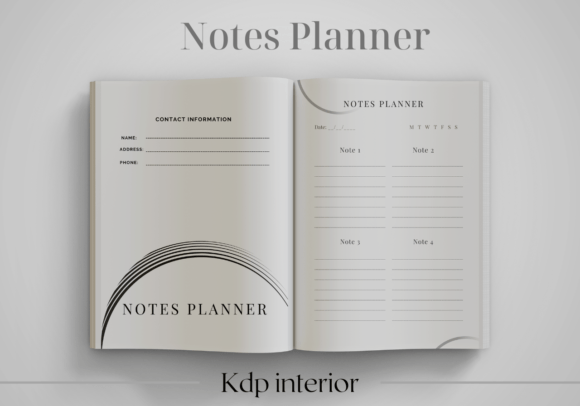
At its core, a KDP Interior is the ready-to-use, formatted inside content of a book. For a traditional novel, this would be the chapters and text. For a low-content or no-content book—such as a planner, journal, logbook, or workbook—the interior is the collection of designed pages that provide the structure for the user to fill in. It's the framework: the calendars, note pages, checklists, and layouts that make the book functional.
Imagine you want to sell a physical "Notes Planner." You are not writing a story or a manual; you are providing a tool. The KDP Interior is the digital file containing all 121 pages of that tool, meticulously formatted to meet Amazon's strict printing specifications. This includes the correct trim size (like 6x9 inches), proper resolution (300 DPI for crisp print quality), and appropriate bleed settings (often "No Bleed" for interior pages). When you receive a file described as "READY TO UPLOAD on Amazon KDP," it means this technical groundwork has been professionally handled and tested, allowing you to focus on the business side of publishing.
The Significance of a Pre-Designed Notes Planner Interior
Why is this so valuable? For aspiring publishers, especially those without graphic design expertise, the technical requirements of KDP can be a significant barrier. Amazon's platform requires precise formatting to ensure books print correctly across their global network. A pre-designed, KDP-tested interior eliminates this hurdle.
- Speed and Efficiency: It transforms a complex project into a simple upload process. You can launch a product in days, not months.
- Guaranteed Quality: Features like "KDP tested" and "300 DPI" assure that the printed product will look professional, with sharp lines and clean text.
- Reduced Risk: There's no worry about files being rejected due to formatting errors, saving you time and frustration.
This model fits perfectly into modern entrepreneurial and creative lifestyles. It allows individuals to participate in the booming self-publishing economy by leveraging specialized digital assets, turning creativity into commerce with minimal overhead.
Breaking Down the Features: What Makes a Great Notes Planner?
A generic notebook and a purposeful Notes Planner are different. The latter is designed with intent. Let's explore the typical features of a quality interior, like the one described with 121 pages for a 6x9 trim size.
Page Count and Structure: 121 pages suggests a substantial, useful volume. It likely includes a mix of sectioned layouts. A well-structured planner might begin with annual and monthly calendar overviews, progress into weekly or daily note pages, and include specialized sections for goals, project tracking, or habit monitoring. This variety caters to different user needs within a single book.
Trim Size – 6x9 Inches: This is a popular, standard book size in the U.S. It's large enough to provide ample writing space on each page but still comfortable to carry and use. It feels substantial and valuable, enhancing the user's perception of the product.
Print Quality – 300 DPI: DPI (Dots Per Inch) is a measure of print resolution. 300 DPI is the industry standard for high-quality printing. It ensures that any lines, graphics, or text in the interior are smooth and not pixelated. This is a non-negotiable feature for a professional product.
No Bleed Settings: "Bleed" refers to printing where the image extends past the edge of the page. For most interior pages of a planner, especially those with borders and defined boxes, a "No Bleed" setting is correct. It means all content is safely within the printable area, guaranteeing no clipped margins after binding.
A common misunderstanding is that creating a low-content book is just about making empty pages. In reality, it's about designing a functional user experience. The layout, spacing, and logical flow of pages are what turn a blank book into a tool that helps someone organize their thoughts more effectively.
The Practical Relevance: How Does This Fit Into Daily Life and Business?
The application of a Notes Planner is vast. In education, a student might use it for lecture notes, research planning, and assignment due dates. In business, an entrepreneur could track client meetings, marketing ideas, and financial logs. For personal life, it serves as a central hub for mindfulness journals, fitness tracking, travel planning, or creative writing prompts.
By purchasing a digital interior and uploading it to KDP, you are essentially becoming a supplier of these tools. You are catering to these diverse needs. The "low-content" model is brilliant because it addresses a universal requirement—the need to record and organize—without requiring you to create custom content for each user. You provide the vessel; they fill it with their unique life.
Examples of Natural Use Cases
Consider these scenarios that illustrate the value:
- A Freelance Graphic Designer uses the planner's project pages to sketch client ideas, jot down feedback, and track billable hours across multiple jobs, all in one dedicated place.
- A College Student utilizes the monthly and weekly layouts to visually map out their semester, balancing class schedules, study sessions, and extracurricular activities, reducing stress through clarity.
- A Writer employs the clean, spacious note pages for drafting chapter outlines, character profiles, and spontaneous ideas, keeping the creative process organized outside of a digital screen.
Each example shows how the planner's structure supports a specific activity. As a publisher, understanding these use cases helps you see your product not as a file, but as a solution.
Navigating the Process: From Digital Product to Physical Book
So, how does the journey work? You acquire a digital Notes Planner Journal KDP interior—a Print PDF file for instant download. This is your product blueprint. You then go to your Amazon KDP account, create a new paperback project, and upload this PDF as the "interior file." You set the trim size to match (6x9), add your cover design (which you can also source professionally), and enter the book details like title, description, and keywords.
Because the interior is pre-tested, Amazon's system will accept it without issue. You set your price, and your book goes live on the Amazon marketplace. When a customer orders it, Amazon prints it on demand, ships it, and you receive a royalty. This entire cycle highlights the practical magic of modern print-on-demand technology combined with accessible digital goods.
A crucial point to clarify: The interior file is a digital product you use to create your physical book on KDP. You are not selling the PDF directly to consumers. You are using it to manufacture the physical planner they buy on Amazon. This distinction is important for understanding the business model.
Building a Broader Understanding: The Ecosystem of Low-Content Publishing
Viewing a Notes Planner interior as a standalone product is a start. To build a broader understanding, see it as part of an entire ecosystem. Many designers and stores offer a range of interiors—different layouts, themes, page counts, and trim sizes. As mentioned, "If you like this one, you can visit our store to find more free and super affordable Designs."
This ecosystem allows you to:
- Test Multiple Products: Launch a classic notes planner, then a gratitude journal, then a business logbook.
- Cater to Niches: Find interiors designed for teachers, gardeners, fitness enthusiasts, or financial planners.
- Scale Your Business: With each new interior file, you can create another unique book listing on KDP, expanding your catalog without exponential work.
The model democratizes publishing. It removes the need for large capital, printing equipment, or inventory risk. Your role becomes that of a curator and marketer, selecting the best tools (interiors) for your target audience and presenting them effectively on the world's largest retail platform.
Conclusion: Empowering Organization and Entrepreneurship
A Notes Planner KDP Interior is more than a digital file. It is a bridge between a timeless human need—to organize our thoughts and time—and a cutting-edge, accessible publishing platform. It represents an opportunity for creative individuals to participate in a global market by providing tangible tools that enhance productivity, mindfulness, and clarity in others' lives.
By understanding its features, like the 121-page structure and KDP-tested quality, and its practical relevance across education, business, and personal pursuits, you can appreciate its true value. Whether you are a beginner exploring a new side business or an experienced publisher looking to expand your catalog, leveraging professionally designed, ready-to-upload interiors is a strategic, efficient, and impactful path to success in the world of Amazon KDP. The blank page awaits, not just for the end user, but for you, the publisher, to fill it with possibility.