The Expense Tracker Printable Template: A Practical Asset for Financial Organization
Managing personal or business finances requires consistent tracking, a task often hindered by cumbersome digital apps or unstructured note-taking. An Expense Tracker Printable Template offers a tangible, focused solution. This is a pre-designed document, formatted for standard paper sizes, that provides a structured framework for recording income, expenditures, and financial goals. Its core value lies in its physicality and simplicity; it transforms abstract financial data into a concrete, visual record that can be annotated, archived, and reviewed without digital dependency.
Core Characteristics and Practical Utility
The template is fundamentally a tool for creating habit. Its layout prompts users to log transactions regularly, categorizing them into predefined or custom sections. This immediate, low-friction recording can reduce the mental overhead of later data entry into complex software. For many, the act of writing reinforces accountability and awareness. The design is typically minimalist, prioritizing clear headings, logical column arrangements, and ample writing space. This functional aesthetic avoids visual clutter, making it easier to focus on the numbers themselves.
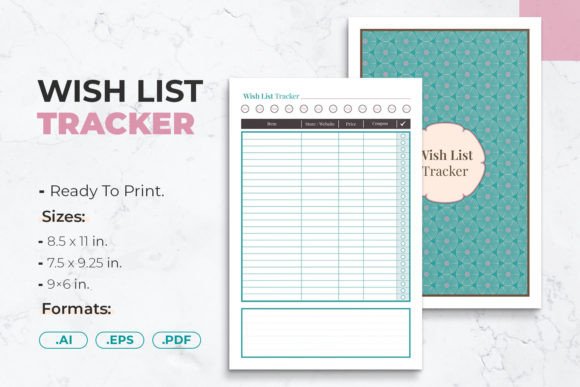
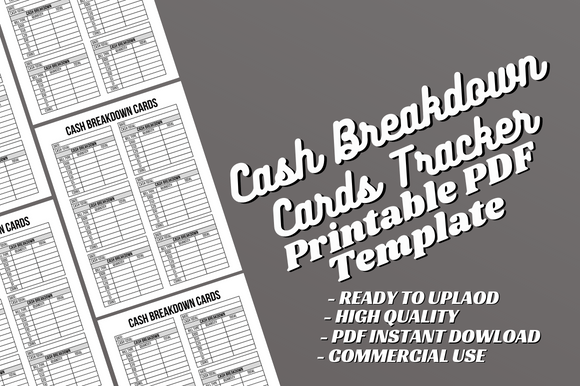
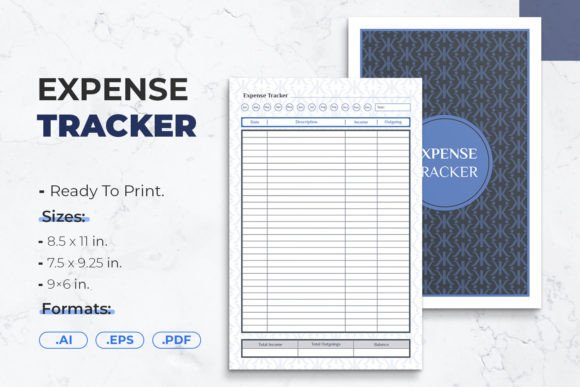
A significant strength is its print-ready nature. Provided as high-resolution PDF files, the Expense Tracker Printable Template is optimized for both home printing and professional publishing. The inclusion of bleed margins and safe areas for hole punching speaks to its dual-purpose design. You can print individual sheets for a binder or utilize the PDF for creating bound volumes, such as through Amazon KDP. This flexibility bridges the gap between personal use and commercial product creation.
Analyzing Real-World Performance and Quality
In daily use, the template’s effectiveness hinges on its usability. A well-designed sheet should allow for quick entry: date, description, category, amount. Over weeks and months, these pages accumulate into a physical ledger. This can be particularly effective for small business owners tracking deductible expenses, freelancers monitoring project costs, or households managing a cash-based budget. The long-term value emerges from the archived stack of pages, providing a straightforward, chronological history for tax preparation, spending analysis, or financial reflection.
The technical specifications indicate a focus on quality. Files at 300 DPI ensure sharp text and lines when printed. The provision of multiple sizing options—including standard 8.5x11 inches and the popular 6x9 inches—means the template adapts to different binding preferences and reader expectations. Furthermore, the inclusion of editable source files, such as AI or EPS formats, is a critical feature for customization. This allows entrepreneurs or designers to modify colors, fonts, or layout elements to align with a brand or personal style before generating their final PDF for KDP or personal use.
Primary Audience and Ideal Use Cases
This resource caters to a broad spectrum of individuals seeking order in their finances. Professionals and freelancers who need to separate business from personal expenses, or who operate on a project basis, will find the template’s categorical logging invaluable. Small business owners, especially those in service-based industries, can use it as a simple, supplementary bookkeeping tool for daily transactions. Educators might employ it as a teaching aid for basic financial literacy. Creators and publishers in the low-content book market view it as a ready-to-use interior file, saving design time and ensuring a functionally sound product.
The template shines in situations where digital tools are either overkill or a source of distraction. For example, during a focused budgeting workshop, a printed sheet provides a shared, central reference point. For a side-hustle entrepreneur just starting, it offers a free-form system without subscription fees. Its reliability is inherent; it doesn’t crash, require updates, or suffer from data sync issues. The presentation is clean and professional, making it suitable for documents meant for client review or personal archives.
Professional Observations on Flexibility and Limitations
From a practical standpoint, the editable source files elevate the template from a static product to a flexible asset. A user with access to vector editing software can adjust the grid spacing, add a logo, or integrate additional sections for notes or calculations. This transforms a generic template into a tailored financial instrument.
However, realistic limitations exist. A printable template lacks automation; it cannot calculate running totals or generate graphs without manual intervention. It is best suited for individuals comfortable with manual entry and periodic manual summation. For those with hundreds of transactions monthly, digital software may be more efficient. Furthermore, the physical nature requires discipline in storage and organization to prevent loss of pages. Its effectiveness is directly proportional to the user's commitment to the habit of filling it out consistently.
Making the Decision: Is This Template Right for You?
Choosing an Expense Tracker Printable Template depends on your workflow, goals, and preferences. Consider it if you value tangible record-keeping, seek a low-tech solution to reduce screen time, or need a straightforward tool for teaching financial basics. It is also an excellent fit if you are exploring the low-content publishing space and require a proven, functional interior layout to pair with your own cover design.
If your primary needs are automated reporting, cloud backup, or complex categorization with subcategories, dedicated financial software remains the superior path. The printable template serves as a companion or a foundational tool, not a replacement for advanced accounting systems.
Ultimately, the Expense Tracker Printable Template represents a blend of simplicity and structure. It provides a disciplined framework for financial awareness in a format that is both personally usable and commercially viable. By assessing your need for physical documentation, your tolerance for manual entry, and your potential commercial aims, you can determine whether this practical asset will integrate smoothly into your financial or entrepreneurial practices.