The Modern Notary Journal: A Professional Tool for Today's Entrepreneur
The role of a notary public has remained a cornerstone of legal and business integrity for centuries, but the tools used by today's professionals are evolving. In an era defined by digital workflows and entrepreneurial hustle, the Notary Journal Logbook - KDP Interior represents a practical bridge between timeless legal requirements and modern, self-directed business practices. This is not simply a blank book; it is a professionally formatted, ready-to-use template designed specifically for the Amazon KDP platform, empowering notaries, small business owners, and side-hustle creators to produce a compliant, high-quality journal with efficiency.
Understanding the Core Product: A KDP Interior Solution
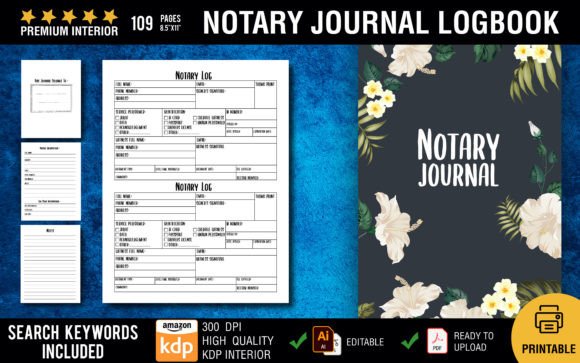
So, what exactly is a "KDP Interior"? For creators navigating Amazon's Kindle Direct Publishing ecosystem, the term refers to the professionally designed inside pages of a book, separate from its cover. The Notary Journal Logbook - KDP Interior is precisely that: a complete, 109-page formatted interior file. It is tested and optimized for print-on-demand services like KDP, ready to be uploaded directly or printed locally. This focus on the interior reflects a significant trend in the creator economy—the specialization and modularization of digital products. Entrepreneurs can now acquire expertly crafted components, like this logbook interior, and combine them with their own custom cover design to build a professional product tailored to their specific brand or needs.
The Evolution of Notary Record-Keeping: From Paper to Platform
Traditionally, notary journals were physical books purchased from legal supply companies. Their design was static, and their availability was limited. The digital shift, however, has democratized access to professional tools. The availability of this Notary Journal KDP Interior, provided in multiple editable source file formats like AI and EPS, signifies this evolution. A notary or legal professional can now obtain a template that is not only print-ready but also adaptable. This allows for minor customizations or branding adjustments before publication, a flexibility that older, off-the-shelf journals simply could not offer.
This evolution aligns with broader changes in professional workflows. More individuals are becoming commissioned notaries as part of broader service offerings—real estate agents, loan officers, freelance paralegals, and small business owners. For them, sourcing a compliant journal quickly and cost-effectively is a practical business need. A pre-formatted, KDP-ready interior solves this by removing the design and layout hurdles, allowing the professional to focus on their service rather than on creating the tool itself.
Key Features and Their Practical Implications
The listed features of the Notary Journal Logbook - KDP Interior are not just technical specifications; they directly address user expectations and quality standards in today's market.
- Dimensions 8.5 x 11 inches: This standard US letter size is ideal for professional use. It provides ample space for clear entries and is compatible with most home printers, office printers, and commercial print shops, fulfilling the promise of printing "in your home, office or print shop."
- 109 Pages & No Bleed: The page count offers substantial capacity for recording numerous transactions. The "No Bleed" specification is crucial for KDP uploads and standard printing, indicating that the design fits safely within the printable area, ensuring no edges are cut off.
- Quality 300 DPI & High-Quality PDF: For a printed logbook, clarity and sharpness are paramount. 300 DPI (dots per inch) is the professional standard for crisp text and lines, ensuring the journal looks authoritative and legible. The inclusion of a high-quality PDF ready for Amazon KDP means the file meets the platform's technical requirements without the user needing to perform complex conversions.
- Editable Source Files (AI, EPS, PDF, JPG): Perhaps the most forward-looking feature. Providing the original Adobe Illustrator (AI) and EPS files empowers advanced users or designers to make modifications. This caters to professionals who may want to add their logo, adjust a header, or translate the journal for a specific market. It transforms the product from a fixed template into a versatile starting point.
- Search Keywords Included: This is a savvy, practical inclusion for the KDP seller. It aids in listing optimization, helping the final product reach its target audience—other notaries and professionals searching for a logbook on Amazon.
Why This Matters for Modern Professionals and Creators
The relevance of this specific product extends beyond notaries themselves. It sits at the intersection of several contemporary trends: the rise of the solopreneur, the demand for professional-grade DIY tools, and the growth of niche digital marketplaces like KDP.
For the entrepreneur or creator, this interior is a ready-made asset. Instead of spending hours designing column layouts, page numbers, and header formats for a notary journal—a task outside their core expertise—they can purchase this tested template. They can then focus their creative energy on designing a compelling cover that reflects their business identity, completing a marketable product quickly. This modular approach accelerates time-to-market and improves final product quality.
For the active notary public, particularly those operating a mobile or side-business notary service, the ability to print a compliant journal locally offers immediate convenience. If they need a new journal urgently, they can download the PDF and have it printed at a local shop within hours, ensuring they never miss a transaction due to a lack of proper record-keeping. This aligns with modern expectations for immediacy and self-service.
Realistic Applications and Recommendations
Consider a freelance paralegal who recently obtained their notary commission to expand their service offerings. They need a journal to start accepting notary appointments immediately. Ordering from a traditional supplier might take a week. By purchasing the Notary Journal Logbook - KDP Interior, they can immediately print a few copies at their office on quality paper and begin work the next day. Later, they might use the same PDF to order a larger, professionally bound batch from an online print-on-demand service.
Another example is a small business that offers notary services as a complimentary benefit to its clients, such as a bank or a law office. Using the editable AI file, they could insert their company logo and name into the journal's header, creating a branded, professional tool that reinforces their corporate identity with every use.
A key recommendation for users is to understand the note that this is an INTERIOR only product. The final step—creating or sourcing a cover—is essential for producing a finished book. This separation is actually a benefit. It allows the user to pair the technically perfect interior with a cover that matches their specific aesthetic or marketing vision, whether they design it themselves or hire a designer for that single task.
Grounded Insights for a Changing Market
The attention paid to products like this reflects a broader shift towards professional self-sufficiency. Technology has not eliminated the need for physical, legally-mandated records like a notary journal; it has simply changed how we produce and access them. The Notary Journal KDP Interior is a response to that change. It provides the reliability and compliance of a traditional logbook through a modern, digital, and creator-friendly format.
It avoids hype by focusing on concrete, tested features: specific dimensions, confirmed page counts, and guaranteed file quality. Its value is in its practicality and its alignment with how professionals and creators actually work today—assembling high-quality components, moving quickly, and maintaining control over their tools and brand. As more services become formalized and regulated, the demand for such accessible, professional-grade templates will likely grow, not just for notaries, but for a wide array of compliance, record-keeping, and business operation needs.
Ultimately, this product is more than a digital file; it is an enabling tool. It reduces the technical barrier for individuals to produce a professional notary journal, ensuring that proper record-keeping—a fundamental aspect of legal and business integrity—remains accessible, efficient, and adaptable in a modern workflow.