The Power and Practicality of a Simple To Do List
A To Do List is more than just a collection of tasks scribbled on a scrap of paper. It’s a fundamental tool for organizing thoughts, managing time, and capturing the myriad responsibilities that fill our days. At its core, a To Do List provides a structured, visual map of what needs attention, transforming mental clutter into actionable steps. Its main purpose is to create clarity and reduce the cognitive load of trying to remember everything, freeing up mental space for actually doing the work.
The enduring appeal of a To Do List lies in its simplicity and adaptability. It doesn’t require complex software or special training. A well-designed list offers immediate value by serving as a reliable external memory, a prioritization aid, and a progress tracker. For many, the simple act of checking off a completed item provides a tangible sense of accomplishment and momentum. This basic characteristic makes it universally useful, from managing a household to running a multinational project.
Why a Physical To Do List Remains Relevant
In a world saturated with digital apps, the tactile experience of a paper-based To Do List holds unique benefits. Writing tasks down engages different cognitive processes than typing, often leading to better retention and commitment. A physical list is always accessible without needing a device, battery, or login. It avoids the distractions of notifications and other apps, creating a focused space for your priorities. For creators, professionals, and anyone who benefits from unplugged planning sessions, a dedicated notebook or printed list becomes a personal command center.
This is where professionally designed To Do List interiors for platforms like Amazon KDP (Kindle Direct Publishing) enter the picture. These are no content or low content book interiors—they provide the structured framework, like a beautifully formatted notebook, ready for you to fill with your own tasks. They solve a specific problem for entrepreneurs and content creators: the need for a high-quality, market-ready product without the time investment of designing every page from scratch.
From Concept to Product: The KDP To Do List Interior
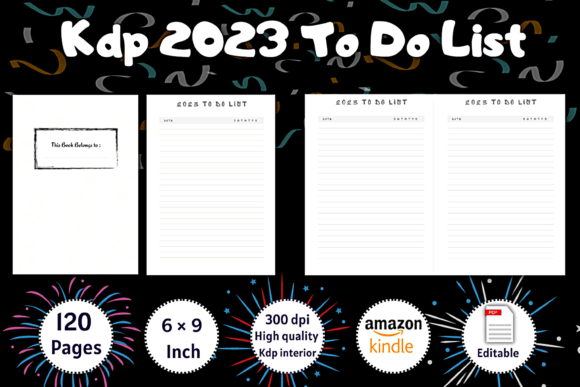
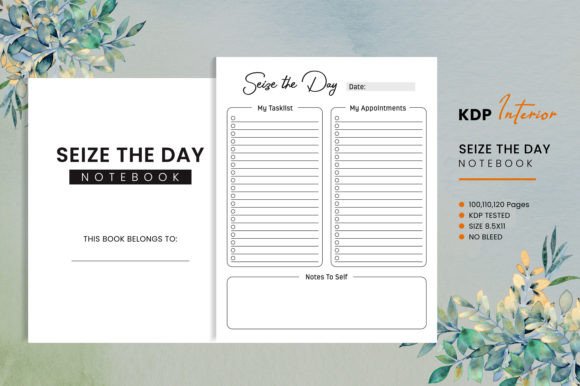
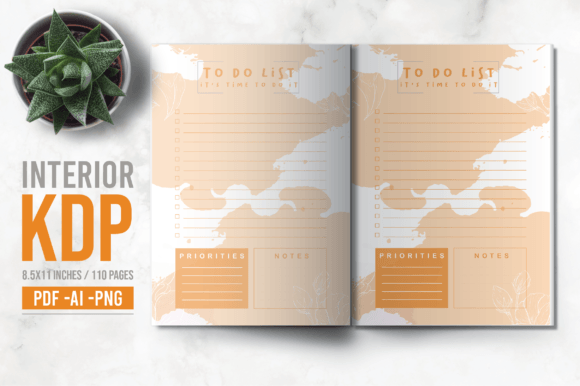
Imagine you have an idea for a productivity planner. Instead of spending weeks designing margins, lines, and layouts, you can use a pre-made KDP To Do List interior. This interior is a complete, tested book file designed specifically for publishing. A typical package includes KDP tested PDF files ensuring the format meets Amazon’s strict requirements, along with PNG files for marketing. The files are set to CMYK color and 300 DPI for professional print quality, with a standard trim size of 8.5x11 inches.
These interiors often come with 110 pages, offering ample space for daily, weekly, or monthly task planning. An added value in many packages is an editable address book for the KDP interior provided as an AI (Adobe Illustrator) file. This allows you to easily customize a section, like a contacts page, to make your version unique. The result is a book ready to be uploaded to KDP, significantly reducing the technical hurdles to launching your own branded productivity tool.
Real-World Applications for Your To Do List
The contexts in which a To Do List proves useful are nearly endless. A freelancer might use one to track client deliverables, invoice dates, and personal development goals. A small business owner could manage inventory orders, marketing tasks, and employee schedules. Educators can plan lesson materials, grade submissions, and administrative duties. Even in personal life, it helps coordinate family events, home projects, and health routines.
For bloggers and marketers, a To Do List is essential for content calendars, campaign timelines, and analytics review schedules. Using a structured interior from a KDP template ensures their planning tool also has a consistent, professional look that could even be sold to their audience. The key is adaptation: the same To Do List framework can be molded to suit creative projects, financial planning, or learning objectives.
Important Considerations Before Choosing Your System
Before committing to a particular To Do List format—whether a DIY notebook or a pre-designed KDP interior—consider your actual workflow. Do you need daily pages, or broader weekly overviews? Is portability a priority, or will it sit on a desk? For KDP sellers, understanding your target audience’s needs is crucial. A student might prefer compact layouts, while a project manager may need space for complex sub-tasks.
Also, assess the completeness of any pre-made interior you purchase. Verify it includes all the technical specifications mentioned: the tested PDF, the high-resolution PNGs for cover graphics, and the editable AI files for customization. This due diligence ensures you won’t face formatting rejections from KDP and can tailor the product to stand out in the marketplace. The goal is to find a system that feels intuitive, not burdensome; a tool should simplify, not complicate.
Embracing Structure to Unleash Productivity
A To Do List, in its essence, is a commitment to order. It’s a promise to yourself to deal with tasks systematically rather than reactively. The physical manifestation of that list, especially one built on a professional template, lends weight and permanence to that commitment. For the beginner, start simple: list three critical tasks for tomorrow. For the entrepreneur, consider how a well-designed interior can become both a personal tool and a commercial product.
The journey from a scattered mind to a focused day often begins with a single line on a page. By leveraging thoughtfully designed resources like complete KDP interiors, you can skip the design overhead and invest your energy where it matters most: in the execution of your ideas, the management of your ventures, and the achievement of your daily goals. Whether used privately or published publicly, a reliable To Do List remains a cornerstone of effective action.